
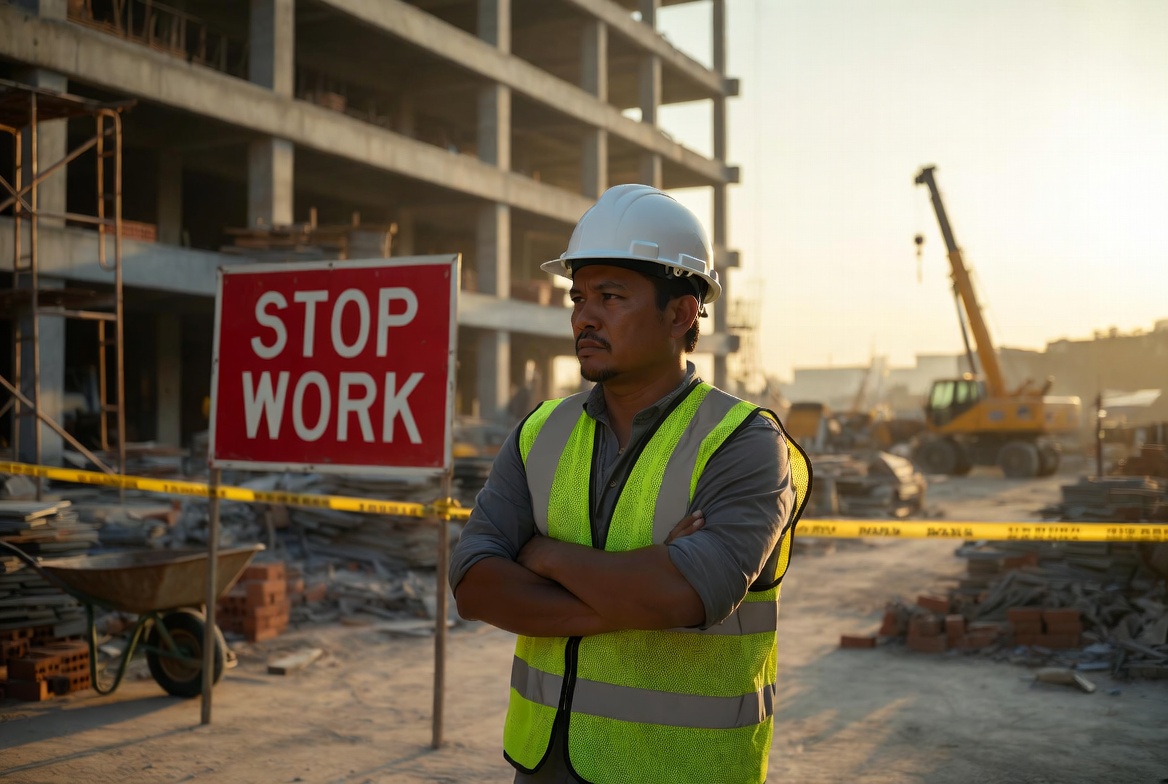
One of the first reactions contractors have when payments stop is simple:
“If they’re not paying, why should we continue working?”
From a practical perspective, the frustration is understandable.
Construction projects are expensive to maintain. Labor, equipment, suppliers, and overhead continue regardless of whether payment is being released on time.
“Habang tumatagal ang delay sa payment, contractor ang naiipit.”
But legally and strategically, stopping work is not always straightforward.
In some situations, suspending work too early can create even bigger problems for the contractor later on.
1. Why Contractors Consider Stopping Work
Most contractors do not stop work immediately after a single delayed payment.
Usually, the issue builds over time.
- repeated delays
- partial releases
- unclear timelines
- accumulating project costs
- pressure from suppliers and workers
Eventually, continuing the project starts becoming financially dangerous.
At that point, suspension of work starts feeling less like a tactic—and more like survival.
2. Why Stopping Work Can Be Risky
This is where contractors need to be careful.
Even if non-payment is real, stopping work improperly can expose the contractor to additional problems.
- default allegations
- termination issues
- delay responsibility disputes
- breach of contract claims
In other words:
“Akala mo protection move—pero pwedeng bumalik sa’yo ang problema.”
This is why suspension decisions should never be made impulsively or purely out of frustration.
3. The Contract Usually Controls the Situation
In many construction projects, the contract contains specific provisions regarding suspension of work.
Some contracts allow suspension under certain conditions.
Others require:
- written notice
- cure periods
- formal demand requirements
- specific procedures before suspension becomes valid
This is why reviewing the contract carefully becomes extremely important before making any major decision.
“Minsan nasa contract na pala ang sagot—hindi lang nababasa agad.”
4. When Suspension May Become Reasonable
There are situations where suspension of work may become justified or contractually allowed.
But this usually depends on:
- the contract
- the severity of the non-payment
- prior notices
- and the overall project circumstances
This is why suspension should not be viewed as a simple emotional reaction.
It is usually a strategic decision with legal and commercial consequences.
In many projects, contractors who properly document delays and payment issues place themselves in a much stronger position if suspension eventually becomes necessary.
“Mas matibay ang position kapag maayos ang documentation bago pa lumala ang situation.”
5. Why Documentation Matters Before Any Suspension
Before any suspension is even considered, documentation becomes extremely important.
This includes:
- unpaid billings
- demand letters
- notices
- email exchanges
- project reports
- meeting discussions regarding payment issues
Many disputes become difficult later because concerns were discussed informally—but never properly recorded.
In construction disputes, paper trails often matter more than memory.
6. The Bigger Strategic Issue
One of the realities contractors eventually discover is this:
Construction disputes are not decided purely by who feels morally correct.
Positions are shaped by:
- contracts
- documentation
- notices
- timelines
- and how parties conduct themselves during the project
I always tell me clients:
It is not what actually happened that matters most—but what you can prove actually happened through documentation.
Madali ang “he says” or “she says” but what do the documents say?
7. Common Mistakes Contractors Make
- stopping work without reviewing the contract
- relying only on verbal discussions
- failing to issue notices
- delaying documentation until disputes escalate
- acting emotionally instead of strategically
Many contractors only begin organizing records once the dispute becomes serious.
By then, important details may already be incomplete or difficult to reconstruct.
Final Thought
Non-payment creates real pressure in construction projects.
But suspension of work should never be approached casually.
The better approach is usually:
- understand the contract
- document the situation properly
- and assess the risks carefully before taking major action
In construction disputes, early decisions often shape the entire outcome later.
Related Articles
- What to Do If You Are Not Paid in a Construction Project?
- Owner-Caused Delay: What Can a Contractor Actually Claim?
- How Documentation Affects Construction Claims
Need Clarity on a Construction Issue?
If you are dealing with delayed payments or considering suspension of work, it is usually better to assess the situation carefully before positions become harder to manage later.
If you want a clearer view of your position, you may send an inquiry below.