
If you’ve been in the construction industry long enough, you’ve probably experienced this before.
You spend days—or even weeks—preparing your proposal.
You visit the project site.
You coordinate with suppliers and subcontractors.
You carefully estimate labor, materials, equipment, overhead, and project risks.
You submit what you believe is a realistic and responsible bid.
Then the project is awarded to another contractor whose price is significantly lower.
“Mas mababa kasi ang bid nila.”
For many contractors, this situation is frustratingly familiar.
But losing a project because your proposal was not the cheapest does not necessarily mean your price was wrong.
1. Every Bid Reflects Different Assumptions
Two contractors can look at the same drawings, specifications, and project requirements and still arrive at very different prices.
That does not automatically mean one contractor made a mistake.
Each proposal reflects a different set of assumptions about how the project will be delivered.
- manpower requirements
- productivity assumptions
- supervision levels
- equipment needs
- material quality
- project risks
- contingency allowances
Experienced contractors often include realistic allowances for uncertainties they have encountered in previous projects.
“Iba iba ang mga assumptions ng contractors.”
2. Winning the Lowest Bid Is Only the Beginning
Construction projects are not won when the Notice of Award is issued.
They are won through successful execution over the months that follow.
A competitive bid is important.
But so are planning, manpower, cash flow, project management, coordination, and the ability to solve problems when conditions inevitably change.
The bid price is only the beginning of the project’s story.
“Ang pinakamahalagang bahagi ng project ay nagsisimula pagkatapos manalo sa bidding.”
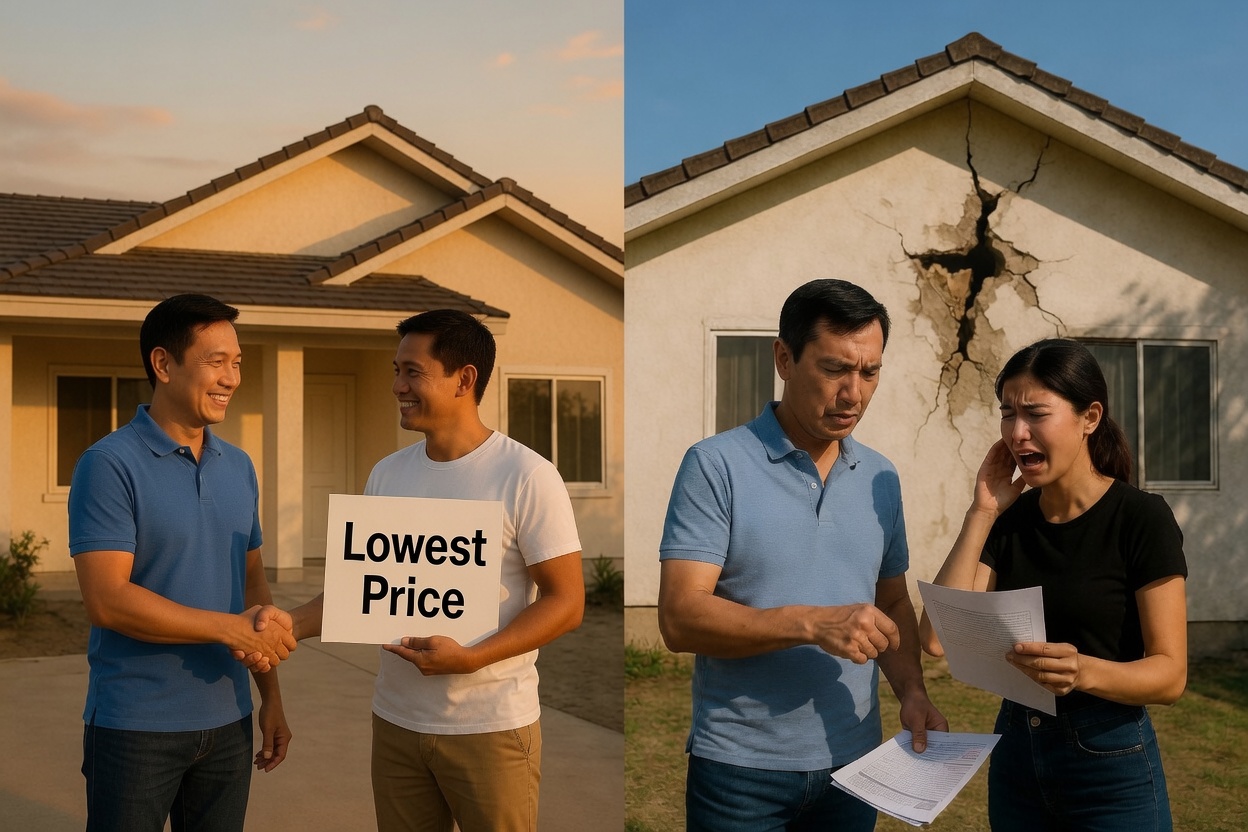
3. Lowest Price Does Not Always Mean Lowest Overall Cost
This does not mean the lowest bidder will always perform poorly.
Many excellent contractors submit highly competitive proposals and successfully deliver outstanding projects.
The point is simply that price alone does not tell the entire story.
As projects progress, the overall cost may also be influenced by:
- variation orders
- delays
- rework
- coordination issues
- quality concerns
- project administration
These are factors that cannot always be understood by looking only at the final number on a bid summary.
4. Good Contractors Sometimes Lose Good Projects
One of the frustrations shared by many experienced contractors is watching projects they lost later encounter avoidable problems.
That observation does not necessarily mean they would have delivered the project perfectly.
However, it serves as a reminder that evaluating a contractor involves much more than comparing the numbers on a bid abstract.
Experience, planning, supervision, communication, financial discipline, and execution often become visible only after the project begins.
“Minsan ang pinakamahalagang bagay ay hindi nakikita sa bid price.”
5. Owners Are Not Just Buying a Price
From the owner’s perspective, obtaining competitive pricing is both reasonable and responsible.
Construction projects represent significant investments, and every owner naturally wants good value for money.
At the same time, choosing a contractor is also a decision about who will be responsible for delivering the project over the months ahead.
Beyond price, owners often benefit from considering factors such as:
- relevant experience
- quality of previous work
- financial capability
- project team
- reputation
- reliability
- ability to solve problems
A contractor’s track record often reflects years of completed projects, lessons learned, and relationships built with clients, consultants, suppliers, and subcontractors.
Those qualities may not appear on the summary page of a bid proposal, but they can significantly influence how the project unfolds after award.
“Sa construction, ang tunay na halaga ng isang contractor ay hindi lang nasusukat sa presyo.”
6. Realistic Pricing Is Not the Same as Expensive Pricing
Many experienced contractors deliberately avoid submitting unrealistically low bids.
This is not necessarily because they cannot compete.
Often, it is because they have a realistic understanding of the manpower, materials, supervision, equipment, and project risks required to complete the work properly.
That experience is frequently built over years of delivering projects and learning from both successes and setbacks.
Sometimes the most competitive proposal is not the one with the lowest number, but the one that most accurately reflects what the project truly requires.
I repeat—the most competitive proposal is not necessarily the cheapest proposal but the one that most accurately reflects what the project truly needs.
“Ang tamang presyo ay hindi laging pinakamababang presyo.”
Final Thought
Losing a project because your proposal was not the cheapest can be frustrating.
But realistic pricing often reflects something equally important—a realistic understanding of what it will actually take to deliver the project successfully.
Construction is ultimately about more than winning a bid.
It is about completing the work safely, professionally, and in a manner that gives both the owner and the contractor the best opportunity for a successful project.
Sometimes, the cheapest contractor really is the best choice.
But sometimes, the cheapest contractor may not be the cheapest decision.
Related Articles
- Why Contractors Should Read Their Construction Contract Before Signing It
- Liquidated Damages: Why Delay Is More Complicated Than It Looks
- Why Construction Claims Fail Even When the Contractor Is Right
Planning to Bid on a Construction Project?
Whether you are preparing a bid, reviewing tender documents, or evaluating the risks of a proposed project, understanding the commercial and contractual aspects of the work before submission can often help avoid more difficult issues later on.
If you would like a clearer assessment of your position before or after a project is awarded, you may send an inquiry below.