
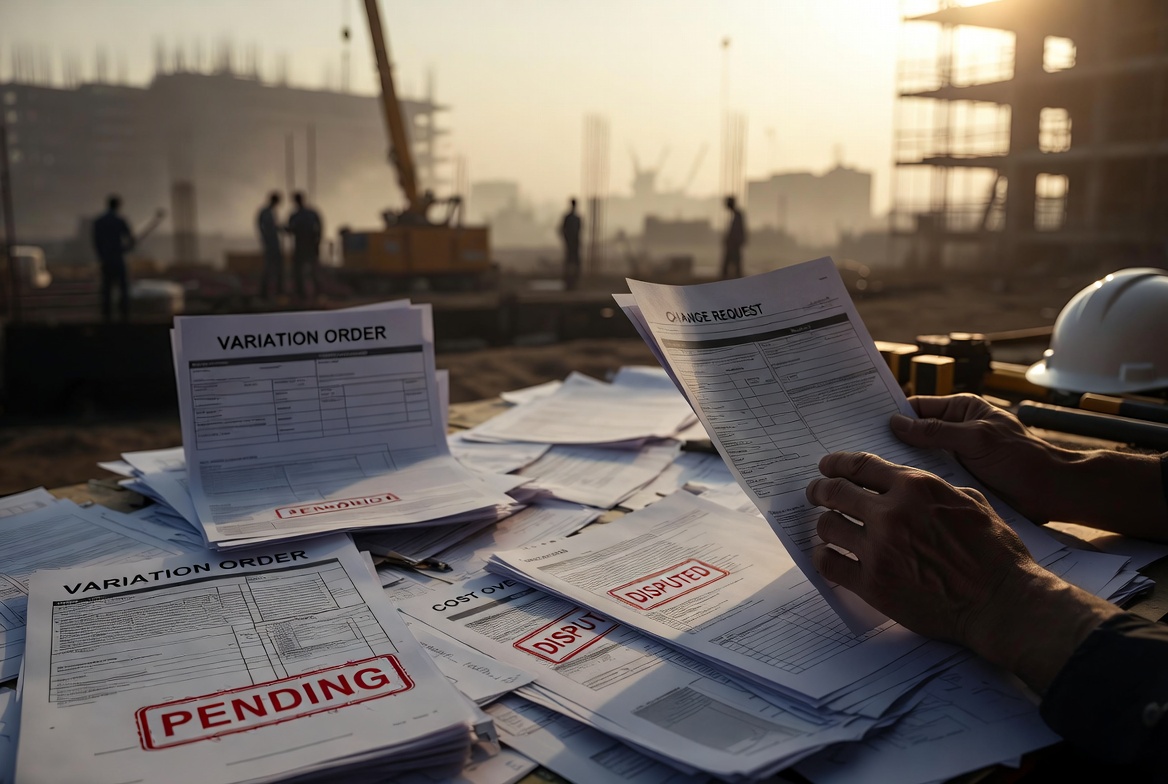
In many construction projects, the dispute does not begin with a major collapse in the relationship.
Sometimes it starts with something much smaller:
a change in the work.
Additional scope gets requested.
Plans are revised.
Site conditions change.
Instructions are given quickly during construction.
At the time, everyone may assume the issue can simply be resolved later.
“Dagdag lang naman ’yan.”
But over time, small changes accumulate.
And once costs, delays, and billing issues become involved, variation orders often become one of the biggest sources of construction disputes.
1. Variation Orders Are Common in Construction
Construction projects rarely proceed exactly as originally planned.
During the course of a project, changes may occur because of:
- revised owner requirements
- design adjustments
- site conditions
- coordination problems
- practical construction realities
Variation orders are therefore not unusual.
In many projects, they are almost expected.
The problem usually begins when changes are implemented informally without proper documentation or agreement regarding cost and time implications.
2. Small Changes Can Become Expensive
One of the misunderstandings in construction projects is the assumption that “minor” changes have minimal impact.
But even relatively small adjustments can affect:
- manpower
- sequencing
- procurement
- equipment allocation
- scheduling
- productivity
Over time, these effects compound.
This is why variation-related disputes are often not just about the direct cost of additional work.
They also involve the broader impact on the project itself.
“Minsan maliit lang ang change — pero malaki ang epekto sa trabaho.”
3. Informal Instructions Create Problems Later
In practice, many project instructions happen informally.
Site discussions move quickly.
People are focused on progress and completion.
Formal paperwork sometimes gets postponed “for later.”
But when billing disputes later arise, questions immediately appear:
- Was the change properly authorized?
- Was pricing agreed?
- Was additional time approved?
- Was the variation documented clearly?
At that point, verbal discussions become much harder to prove reliably.
“Kapag may dispute na, saka nagiging importante ang written instructions.”
4. Cost Is Usually Only Part of the Problem
One of the common assumptions in variation discussions is that the issue is limited to the direct value of the additional work.
But in many projects, variations also affect:
- project sequencing
- productivity
- coordination between trades
- procurement timing
- completion schedules
Because of this, even a relatively small change can create broader ripple effects throughout the project.
This is one reason variation-related disputes often become more complicated than parties initially expect.
“Hindi lang presyo ang naaapektuhan minsan — pati buong takbo ng project.”
5. Delayed Approvals Can Escalate the Situation
Another common issue is delay in approving variations formally.
Sometimes work proceeds while pricing or approval discussions remain unresolved.
Over time, this creates uncertainty regarding:
- entitlement
- pricing
- time extensions
- billing treatment
- responsibility for project impacts
As the project continues moving, positions can become increasingly difficult to separate clearly.
“Habang tumatagal na walang malinaw na approval, mas lumalaki ang risk ng dispute.”
6. Documentation Becomes Extremely Important
Variation disputes are heavily driven by records.
This includes:
- written instructions
- revised drawings
- notices
- cost proposals
- approval records
- meeting minutes
- updated schedules
Without proper documentation, disputes later become heavily dependent on conflicting recollections of what was supposedly agreed.
The earlier records are organized, the easier it usually becomes to explain the impact of the variation later on.
7. Variation Disputes Rarely Stay “Small”
One of the realities in construction disputes is that unresolved variations often spread into larger project problems.
Over time, unresolved changes may eventually affect:
- progress billings
- cash flow
- project timelines
- contractor-owner relationships
- overall claim positions
What initially appeared to be a “minor adjustment” can eventually become part of a much larger dispute.
“Minsan maliit lang ang umpisa ng dispute — pero lumalaki habang tumatagal ang project.”
Final Thought
Variation orders are normal in construction projects.
Disputes surrounding them are also common.
The earlier changes are documented, priced, discussed, and organized properly, the easier it usually becomes to manage the situation later.
In construction projects, small informal changes rarely stay small forever.
Related Articles
- Why Construction Claims Fail Even When the Contractor Is Right?
- Owner-Caused Delay: What Can a Contractor Actually Claim?
- Can a Contractor Stop Work for Non-Payment?
Need Clarity on a Variation Issue?
If your project involves disputed variations, pricing disagreements, or undocumented changes, it is usually better to assess the situation early before positions become harder to untangle later on.
If you want a clearer view of your position, you may send an inquiry below.