
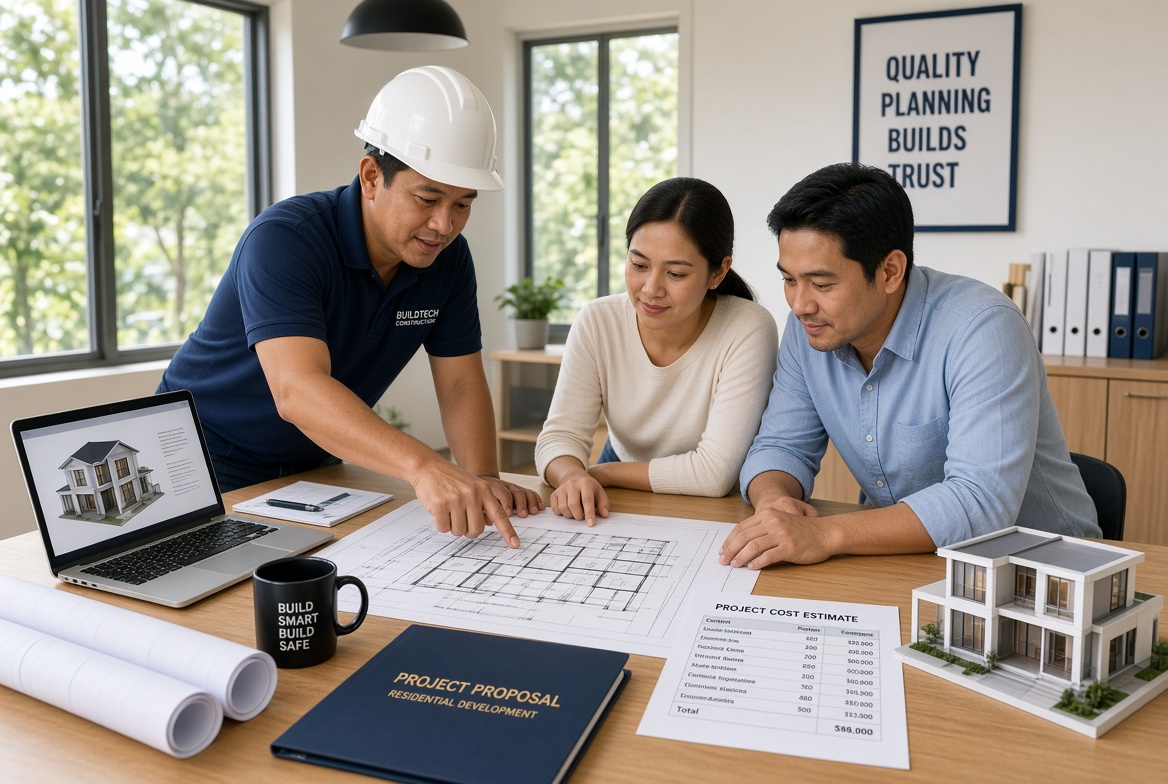
Recently, I met with a friend who is a contractor. He raised an issue that I thought was worth discussing.
He told me that even when the construction contract is well-prepared, and even when he believes his team has properly executed the project, disputes with the owner still arise.
Do you know why that happens?
If the contractor is reputable, the workmanship is good, and the contract is properly prepared, where does the conflict come from?
My answer to him was simple:
Misaligned expectations.
In many construction disputes, the problem is not necessarily the quality of the work itself.
The owner expected one thing. The contractor understood something else.
The contractor thought a particular cost was understood to be additional. The owner thought it was already included.
Neither side necessarily intended to cause a problem.
But by the time the misunderstanding became obvious, money had already been spent, work had already been performed, and emotions had already entered the picture.
And at that point, what started as a simple misunderstanding can quickly become a construction dispute.
“Many construction disputes are not caused by bad work. They are caused by different expectations about the work.”
That is why I believe a contractor’s role begins much earlier than the first day of construction.
A good contractor does not simply estimate the project, submit a proposal, sign the contract, and start building.
A good contractor helps the owner understand what the project will actually involve.
- What is included.
- What is not included.
- What can change.
- What may cost more.
- What may take longer.
- What depends on the owner.
- What depends on circumstances neither party can control.
And, perhaps most importantly, what the contractor cannot reasonably promise at the bidding stage.
1. Winning the Project Is Not the Same as Setting Up the Project for Success
For many contractors, the bidding stage is naturally focused on one question:
How do I win the project?
That is understandable.
A contractor needs work. A competitive price matters. A proposal needs to be attractive enough for the owner to choose it over other contractors.
But there is another question that deserves just as much attention:
Does the owner actually understand what the proposal means?
A proposal may say ₱10 million.
A project may be estimated to take six months.
On paper, those numbers can look simple. But behind those numbers are assumptions.
The price may assume a particular set of plans.
- It may assume certain materials.
- It may assume certain site conditions.
- It may assume timely owner decisions.
- It may assume that no major changes are made during construction.
- It may assume that certain costs remain within a particular range.
The owner, however, may hear something completely different:
“This house will cost ₱10 million.”
“This house will be finished in six months.”
And that difference can become a problem later.
The contractor may have been thinking in terms of an estimate based on assumptions. The owner may have been thinking in terms of a fixed promise.
“An estimate can become a promise in the owner’s mind if the contractor does not explain the assumptions behind it.”
This is why winning the project and setting up the project for success are not always the same thing.
A contractor can win a project with the lowest price.
But if that price was presented without explaining what it assumes, excludes, or may be affected by later changes, the contractor may have created an expectation that becomes difficult to manage once construction begins.
2. The Cheapest Quote Can Create the Most Expensive Expectations
Price is one of the first things an owner looks at when comparing contractors.
That is perfectly reasonable.
But the number at the bottom of the proposal does not tell the whole story.
Two contractors can submit very different prices for what appears to be the same project.
One may have priced conservatively. Another may have made aggressive assumptions.
One may have included certain finishes. Another may have excluded them.
One may have allowed for contingencies. Another may have assumed that nothing unexpected will happen.
The owner may see only the final numbers.
That is where expectation problems can begin.
Suppose a contractor gives the owner a very attractive price to win the project.
The owner naturally becomes attached to that number.
Several months later, additional work is required. A material selection changes. A site condition turns out to be different from what was assumed. Prices have moved. The owner makes changes that affect the schedule.
The contractor explains that these circumstances were not included in the original price.
The owner responds:
“But I thought everything was already included.”
Now the disagreement is no longer just about money.
It is about what the owner believed the contractor had promised.
Remember, as a contractor, the price you communicate creates an expectation. The assumptions behind that price need to be communicated too.
3. At the Bidding Stage, Tell the Owner What the Price Does Not Include
One of the most valuable things a contractor can do before the project starts is explain what is not included in the price.
This conversation can sometimes feel uncomfortable.
A contractor may worry that talking about exclusions, contingencies, or possible additional costs will make the proposal less attractive.
But avoiding the conversation does not eliminate the issue. It simply moves the conversation to a later stage—when the project is already underway and the consequences are more expensive.
Before the owner accepts the proposal, the contractor should make the assumptions behind the price as clear as reasonably possible.
That includes questions such as:
- What exactly is included in the scope?
- What is specifically excluded?
- Which items are allowances rather than fixed prices?
- Which materials or finishes have not yet been selected?
- Are there quantities that still need to be verified?
- Are there site conditions that have not yet been fully investigated?
- Are there owner-supplied items that are outside the contractor’s price?
These are not merely technical questions.
They are expectation-setting questions.
“What you leave unexplained during bidding may become a dispute during construction.”
The goal is not to overwhelm the owner with every possible problem that could ever occur.
No contractor can predict everything.
The goal is to identify the assumptions that matter and make sure the owner understands them before those same assumptions become the problem.
4. Talk About Additional Costs Before They Become “Surprises”
One of the fastest ways to damage the relationship between an owner and a contractor is to introduce an additional cost as though it should have been obvious from the beginning.
From the contractor’s perspective, the reason may be perfectly understandable.
- The owner changed the design.
- A specified material became unavailable.
- The actual site condition was different from what the contractor was originally told.
- A particular component became significantly more expensive.
- Additional work became necessary.
But from the owner’s perspective, the reaction may be very different:
“Why wasn’t this included in your original price?”
“An additional cost feels very different when it was explained before construction than when it appears unexpectedly in the middle of construction.”
That is why contractors should discuss foreseeable categories of additional cost during the bidding or early planning stage.
5. Explain Price Escalation and Inflation
Construction projects can last for many months, and larger projects can take several years.
The price of labor, fuel, steel, cement, imported materials, equipment, and other inputs can change during that period.
A contractor does not necessarily know at the bidding stage exactly what every construction input will cost months later.
This is particularly important when a contractor is asked to provide a price far in advance of actual procurement or when the project is expected to have a long construction period.
The contractor should therefore explain, as early as reasonably possible, whether the quoted price assumes that certain costs will remain stable and what the contract provides if there is a significant change in those costs.
That may involve an escalation provision, an agreed adjustment mechanism, allowances, or another contractual arrangement.
The important thing is that the owner understands the risk before signing.
“If the price is subject to assumptions, explain the assumptions before the owner becomes attached to the number.”
A contractor should not wait until prices have already increased substantially before explaining that the original price was based on conditions that have since changed.
By then, the owner may reasonably feel that an entirely new price is being introduced halfway through the project.
6. Explain Change Orders and Variation Orders Before They Happen
Changes during construction are common.
An owner may decide to change a room layout, upgrade a finish, add a feature, move an opening, change a fixture, or request something that was not part of the original scope.
The problem is often not the change itself. The problem is when the owner does not understand what that change will actually cost or how it will affect the project.
A change in tile selection, for example, may appear to involve only the difference in price between two tiles.
But depending on the timing and circumstances, a change may also affect procurement, labor, installation, wastage, sequencing, and other trades.
The same is true for changes that appear small but are made after work has already been completed.
Before construction begins, the contractor should explain how changes will be handled.
- What counts as a change?
- Who can authorize it?
- How will the additional or reduced cost be calculated?
- Will the change affect the completion date?
- When must the change be approved?
These questions are much easier to answer before there is an active dispute over money and time.
“A change is easier to manage when everyone understands its consequences before the work begins.”
7. Explain Contingencies Without Scaring the Owner
Contractors sometimes hesitate to discuss contingencies because they are afraid the owner will think the contractor is simply trying to make the project more expensive.
But a contingency is not necessarily an indication that a contractor expects the project to go wrong.
It can simply acknowledge a basic reality of construction: Not everything can be known with complete certainty before construction begins.
- There may be conditions that cannot be fully verified until excavation begins.
- There may be existing conditions hidden behind walls or ceilings.
- There may be quantities that cannot be confirmed until portions of the work are opened.
- There may be owner selections that have not yet been finalized.
- There may be regulatory or utility requirements that only become clear during the course of the project.
The responsible approach is not to pretend these uncertainties do not exist.
It is to identify them and explain how they will be handled if they materialize.
“A contingency does not mean expecting problems. It means acknowledging that not everything can be known in advance.”
8. Do Not Promise What You Cannot Control
The same principle applies to the construction schedule.
Owners understandably want a firm completion date.
A contractor who says, “We can definitely finish in six months,” may have a better chance of winning the project than someone who gives a more qualified answer.
But a construction schedule can depend on events and decisions that neither party can completely control.
- owner approvals and decisions;
- availability and lead times of materials;
- site access and existing conditions;
- weather and other external events;
- government or utility requirements;
- changes to the original scope;
- delays caused by other parties or trades.
That does not mean a contractor should refuse to provide a schedule.
It means the contractor should explain what the schedule assumes and what circumstances can reasonably affect it.
A target completion date is useful.
An unconditional promise of a date that depends on factors outside the contractor’s control can be dangerous.
“Give the owner a realistic target—not a promise built on assumptions you cannot control.”
9. Tell the Owner What You Need From Them
Expectation-setting should not be a one-way conversation.
Contractors should also explain what they need from the owner for the project to proceed smoothly.
That may include timely decisions, approvals, payments, access to the site, selection of finishes, confirmation of owner-supplied items, and communication through the agreed project representatives.
This is especially important for projects where the owner’s decisions can directly affect procurement, sequencing, or the work of other trades.
The owner should understand that asking for a decision tomorrow rather than next month may not simply be a matter of convenience.
The project may actually be waiting for that decision before the next activity can proceed.
“Good expectation-setting tells the owner not only what the contractor will do, but also what the contractor needs from the owner.”
10. Have the Difficult Conversations Before You Have the Contract
I understand that some conversations are uncomfortable.
- How much can the owner really afford?
- Is the budget realistic for the specifications being requested?
- How firm is the target completion date?
- What happens if the owner changes the design?
- What happens if material prices increase?
- What happens if an unforeseen site condition is discovered?
- What happens if an event outside either party’s control affects the schedule?
These are conversations that should not be postponed until construction is already underway.
In fact, the earlier these questions are discussed, the easier they usually are to address.
Before the contract is signed, there is still room to negotiate.
The owner can adjust the design. The contractor can revise the price.
The parties can agree on allowances, exclusions, escalation mechanisms, contingencies, schedules, and procedures for changes.
Once construction has started, however, those same conversations can become much more difficult.
Money has already been spent. Materials may already have been ordered. Work may already have been completed. And both sides may already believe that they know what the other promised.
“If a conversation is uncomfortable before construction begins, it will usually be much more uncomfortable after money has been spent.”
A good contractor should therefore be willing to have the difficult conversation early.
Not because the contractor expects the project to fail. But because the contractor understands that a successful project depends on both parties entering it with the same understanding.
11. A Contractor’s Pre-Construction Expectation Checklist
Before finalizing a proposal or signing a construction contract, a contractor should consider walking the owner through the following questions.
A. Scope
What exactly is the contractor being engaged to build?
Are the plans, specifications, quantities, finishes, and other requirements sufficiently defined?
Are there items that the owner may reasonably assume are included even though they are not?
B. Price
What does the quoted price actually cover?
Which costs are fixed?
Which are allowances or estimates?
Which items are excluded?
Are there costs that cannot yet be determined with reasonable certainty?
C. Escalation and Inflation
Is the price intended to remain fixed?
Does the contract contain an escalation or adjustment mechanism?
What happens if the cost of significant materials or labor changes materially during a long project?
D. Variations and Change Orders
What happens if the owner changes the design or scope?
Who is authorized to approve the change?
How will the additional or reduced cost be determined?
Can the change affect the completion date?
E. Contingencies and Unforeseen Conditions
Are there site conditions that cannot yet be fully verified?
Are there quantities, existing structures, utilities, or other conditions that may require further investigation once construction begins?
If an unforeseen condition arises, how will the parties determine its effect on cost and schedule?
F. Schedule
What is the target completion date?
What assumptions does that date depend on?
What owner decisions, approvals, procurement lead times, site conditions, or external events could affect the schedule?
G. Owner Responsibilities
What does the contractor need from the owner?
Will the owner need to make timely selections and approvals?
Who provides owner-supplied materials or fixtures?
Who has authority to give instructions?
How will decisions be communicated?
G. Competion and Turnover
What does the owner mean by “finished”?
What does the contractor understand to constitute completion?
Are there commissioning, testing, punch-list, inspection, or turnover requirements that should be discussed before work begins?
H. Arbitration Clause
Does the contract contain a CIAC arbitration clause?
Does it require prior discussions for amicable settlement in case of dispute?
Are there other modes of alternative dispute resolution that the parties prefer?
None of these questions guarantees that a project will be free from disputes.
They do something more realistic and more valuable: They reduce the number of things that the owner and contractor are likely to understand differently once construction is underway.
12. Setting Expectations Is Not a Sign of Weakness
Some contractors worry that being too transparent about risks will make the proposal less attractive.
They may think that another contractor will simply give the owner a lower number, a shorter schedule, and fewer qualifications—and win the project.
That can happen.
But there is a difference between making a proposal attractive and making a project realistic.
A contractor who says, “Everything will be fine,” may sound reassuring.
A contractor who says, “Here is what we can confidently commit to, here are the assumptions behind our price and schedule, and here are the things that may require adjustment,” may sound less certain.
But that second contractor is often demonstrating something more valuable:
An understanding of construction risk.
A professional contractor does not need to predict every problem. No one can.
What a professional contractor can do is identify the important uncertainties, explain them clearly, and establish in advance how the parties will deal with them if they arise.
“A good contractor does not sell a fantasy. A good contractor sells a realistic project.”
Final Thoughts
A construction project does not begin when the first concrete is poured.
It begins much earlier—when the owner and contractor first discuss what is going to be built, how much it is expected to cost, how long it is expected to take, and what assumptions those expectations are based on.
Many construction disputes happen because those conversations were incomplete.
- The owner thought the price was final. The contractor thought it was based on certain assumptions.
- The owner thought the completion date was absolute. The contractor thought it was a target subject to legitimate extensions.
- The owner thought changes would be simple. The contractor knew they could affect both cost and schedule.
- The owner thought unexpected problems would be absorbed by the contractor. The contractor believed those risks had never been included in the original price.
By the time those differences become apparent, the project may already be under pressure.
That is why expectation-setting should not be treated as a sales issue or a courtesy.
It is part of project management.
It is part of risk management.
And, ultimately, it is part of preventing disputes.
The best time to align expectations is before construction begins—not after they collide.
A good contractor does more than build according to plans.
A good contractor helps the owner understand the realities behind those plans.
“Good construction manages the work. Great construction manages expectations before the work even begins.”
Related Articles
- Your Contractor Is Not a Mind Reader—And Neither Are You
- The Cheapest Contractor May Not Be the Cheapest Decision
- Progress Payments Should Follow Progress—Not Promises
- Force Majeure in Construction: When Is a Delay Really Beyond the Contractor’s Control?
- Why Contractors Should Read Their Construction Contract Before Signing It
Planning a Construction Project?
Before construction begins, make sure you and your contractor have the same understanding of the scope, price, schedule, assumptions, and risks involved in the project.
If you are a contractor looking to properly structure your construction contract, or an owner who wants to understand the risks and obligations before construction begins, you may send an inquiry using the form below.